VR spaces

Decide inside
your organisation

Three rooms on one model of your company: the strategy table, a facilitated session with an AI facilitator, and the office where AI agents work. In the browser today; headset support in the pilot.

Three rooms, one model

The rooms read the same processes, people, hypotheses and decisions as the platform. A decision made in one room shows up in the others.

Strategy room

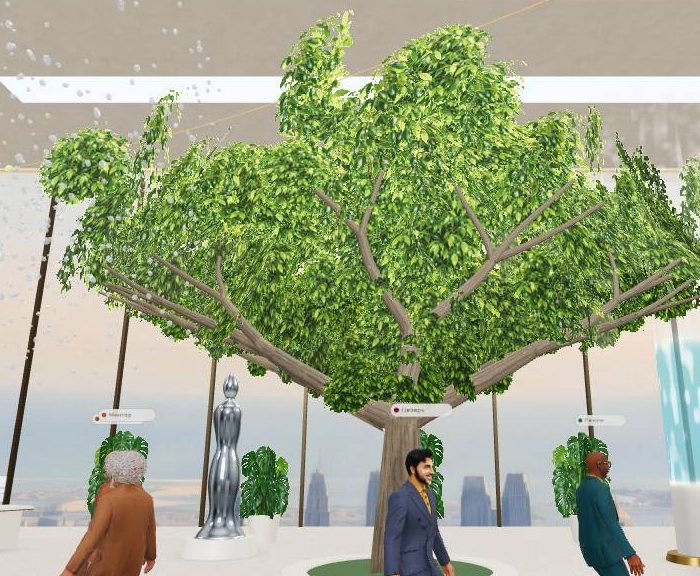
The leadership stands at one table with the company’s strategy laid out on it.

  • Every direction of the company lies on the table, with the people on it, its hypotheses and its next decisions.
  • Boards on the walls show pace, the sales funnel, clients and the decisions waiting for an answer.
  • Moves made at the table go into a draft of the day. The current plan changes only when its owner approves the draft.
  • Up to six people work in the room at once. Guests look, talk and point, but change nothing.

In the room: The owner, the leadership team, invited guests

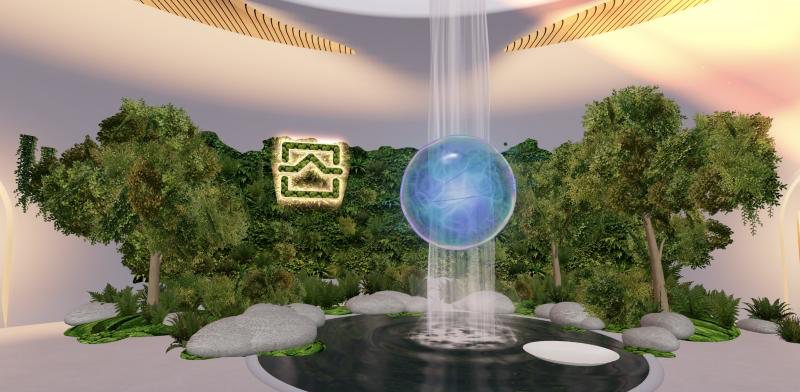
The facilitator sphere, warm and glowing while it speaks
The sphere while it speaks

Facilitation room

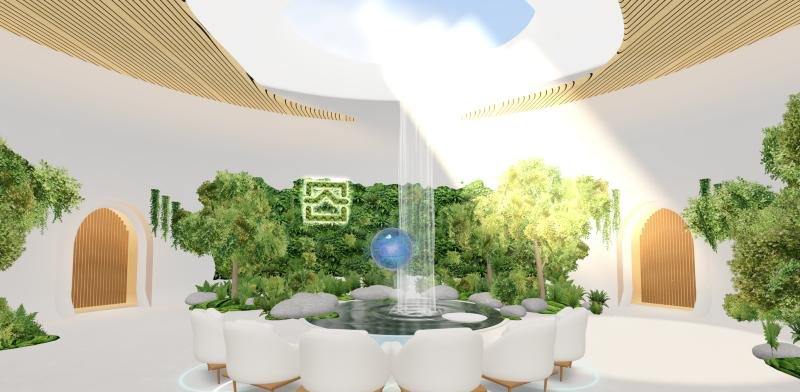
A garden room where a sphere leads the session. It asks, people answer, and every decision ends up in a protocol.

  • The sphere asks questions in rounds, up to five a round. Each question has four answers, and the sphere suggests one.
  • People answer with a button or in their own words, by voice or on screen.
  • Everyone votes, and votes carry weight: the owner’s can count more. A question stays open until the room agrees, accepts a majority, or marks it as disputed.
  • The sphere looks at the answers and asks the next round deeper. After the last round, everyone gets the protocol: the questions, the votes and a short summary.

In the room: A leadership team, a project group, the people who own one process

Portrait of Kai, the lead agent
KaiLead agent. Retells your instruction and records it only after you confirm.

Agent office

A bright two-storey atrium where AI agents work like executives: at their desks, in groups, in conversation.

  • Each agent has a face, a desk and an area: sales, money and risk, platform and data, delivery, people.
  • Agents walk, gather and talk about their work. From afar you see the topic over a group; up close you read who says what.
  • Walk up to a group and it turns to you. You get three ready answers or say your own, and your decision goes to the decisions board in the strategy room.
  • Agent voices are off by default. When nobody is in the office, the agents use no paid AI services.

In the room: The owner and the people who set agents their work

Sit in for one round

Three questions about your company, as the sphere asks them in the facilitation room. You hold the owner’s vote. At the end you get a short protocol: what your leadership would decide first.

Before the round

Take your seat. I will ask three questions about your company. Each has four answers; I suggest one, you decide.

  • You, the ownerYour vote counts 3
  • Finance leadCounts 1, fictional
  • Operations leadCounts 1, fictional

A question closes when everyone agrees, or when the owner accepts a majority by weight. That is how the room votes, too.

Facilitated sessions are one part of how we bring an organisation to an AI-native way of work.

Read the approach

In the room and in the headset

Drag the divider. On the left, a person in the room; on the right, what the headset shows them: the strategy table with every direction, hypothesis and decision.

In the room
In the headset

Strategy room: the leadership stands at one table with every map, hypothesis and decision of the company.

Who it is for

  • Owners and leadership teamsTo agree priorities in one session and leave with decisions on record, not a page of notes.
  • Leadership offices in governmentTo walk through the agency’s priorities together and see who carries each one.
  • Teams starting with AI agentsTo see what each agent works on and whom it waits for, and to give it decisions in person.

How a session runs

  1. We agree the topicOne question your leadership needs to settle: a priority, a process, a plan for the next quarter.
  2. We prepare the roomYour strategy map, the questions for the first round and who votes with what weight.
  3. The sessionIn the browser on a laptop or a large screen. Headset support comes with the pilot.
  4. The protocolEvery participant gets the questions, the votes and the decisions, and each decision becomes a task with an owner.
Book a VR session

Questions people ask

Do we need VR headsets?

No. All three rooms work in the browser on a laptop or a large screen today. Headset support is part of the pilot.

What is the sphere in the facilitation room?

An AI facilitator. It asks questions in rounds, each with four answers and one suggestion, listens to free answers, and writes the protocol at the end. It does not decide: people vote, and the owner of the session closes disputed questions.

How does weighted voting work?

Each participant has a weight set before the session, for example the owner counts three and others one. A question closes when everyone agrees. If a majority by weight forms, participants can change their minds or accept the majority. With no majority, the owner can leave the question disputed or skip it.

What do we get after a session?

A protocol: the questions, the answers, who voted for what, and a short summary. Decisions go to the decisions board and become tasks with owners.

Who is Kai?

Kai is the lead agent in the agent office. He retells an instruction and records it only after you confirm it, advises on what he reads, and brings decisions that are not his to the decisions board with the reasons and options. He changes nothing on his own.

Where does our data stay?

The rooms read the same model of your organisation as the rest of the platform, wherever it is deployed, including your own servers. Names are masked before anything reaches an outside model.

How is this different from the approach?

The approach is how we work with an organisation, of which facilitated sessions are one part. This page shows the rooms where those sessions and the work with agents happen.

Talk to us

Step 1 of 3
What would you like to do?

Rather talk first? Book a 30-minute call